
|
|
||||||||||||||||||||||||||||||||||||||||||||||||||||||||||||||||||||||||||||||||||||||||||||||||||||||||||||
 |
 |
|
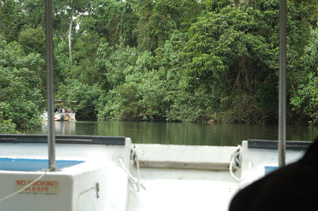
The Daintree River |
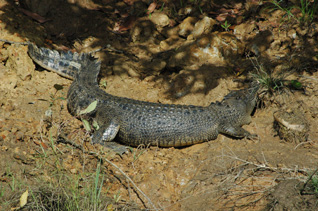
...and its inhabitants, both harmful |
 |
 |
|
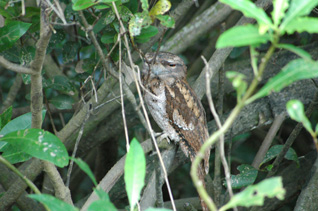
... and less harmful |
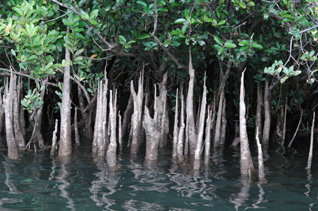
Mangrove tree shoots to collect air |
 |
 |
|
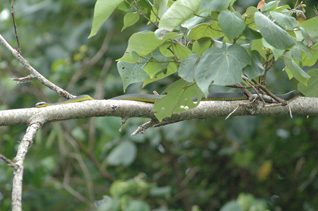
Snakes are quite common in trees |
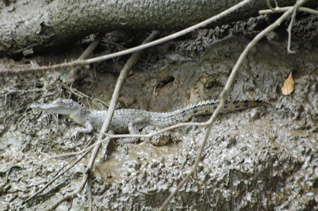
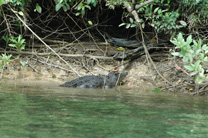
He looks cute, but... |
 |
 |
|
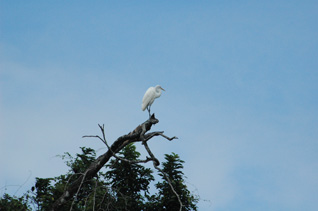
Avion life abounds high in the trees |
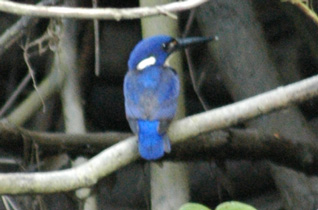
...and even lower to the water |
 |
 |
|
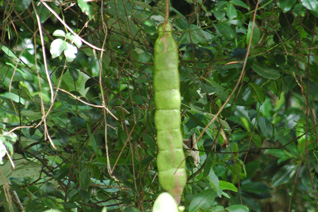
Example of seed pods waiting to compete |
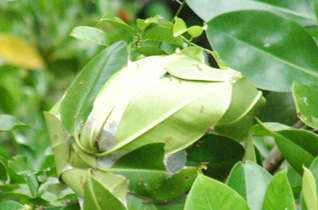
An ants' nest in a tree, wrapped in leaves! |
 |
 |
 |
|
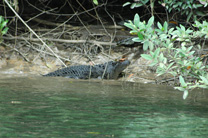
Sleek and smooth as he glides through the water |
||
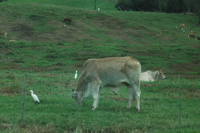 A drive up through the valley proper took us by fields of cattle and birds. What seemed unusual was the proximity of the small white birds know as Eastern Reef Egrets to the Brahman cows. It seems that there is a symbiotic relationship where the cow provides a source of food for the birds and the birds rid the cow of the insect pests that bother it. Thus you see these bird/cow combinations all over the fields. Often we saw two egrets for every one Brahman cow.
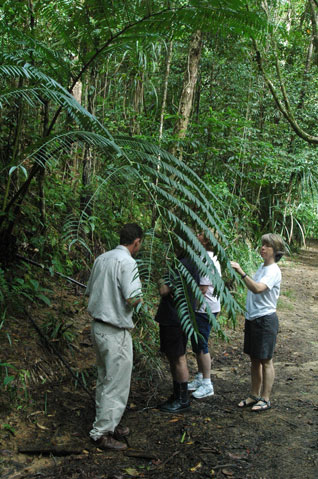
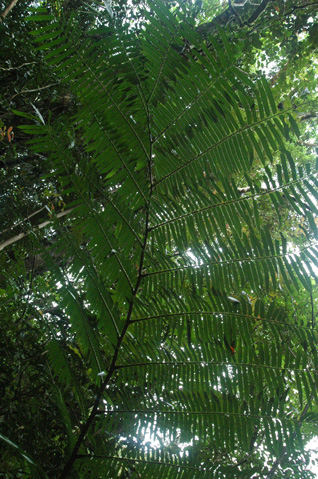
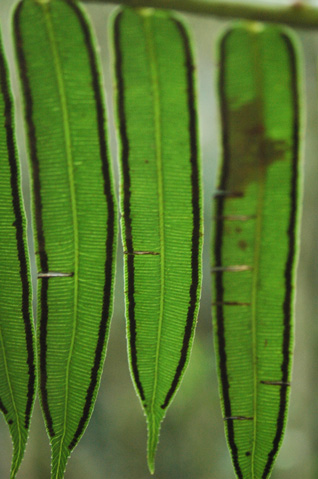
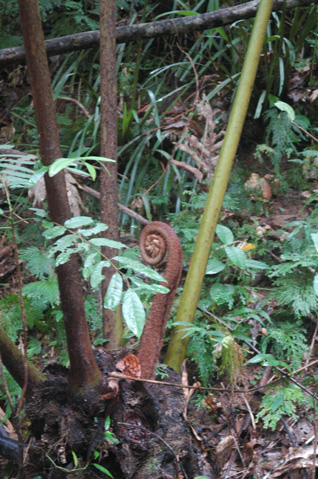
Further on we visited some private property where there was more flora to investigate. The grand-daddy of ferns is this one, known as the king fern. It is the largest single branch fern in existence. When it soaks up enough water, it will bend over and break off allowing for new growth.
 |
 |
|
The master explains nature to an eager audience |
This fern makes for good cover |
 |
 |
|
Up close and personal |
New growth on the way out |
 |
 |
|
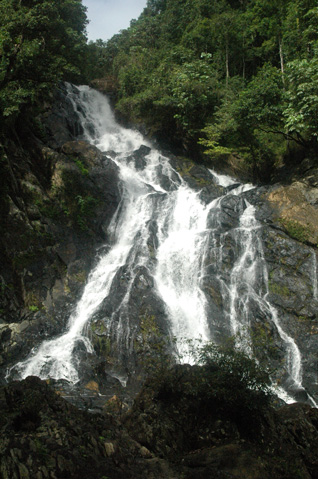
Falls on the property |
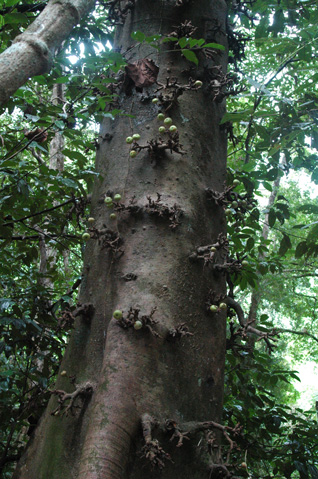
Fruit that grows sideways on the trunk of a tree |
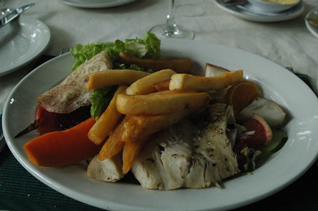
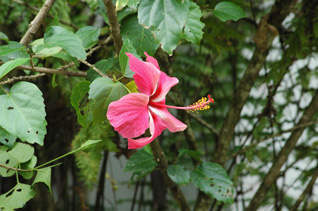
It was next time to catch some lunch. For this we were ushered to a special restaurant where we were served barramundi fish and fruit from the region. We also enjoyed a lecture on each of the fruits that were on our plates. They were all delicious. The restaurant was also well appointed with flowers.
 |
 |
|
Our lunch presentation |
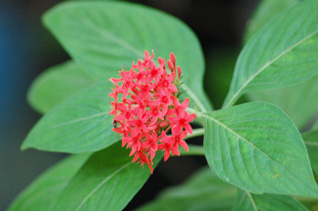
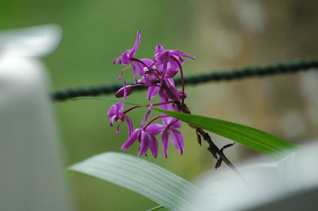
Beautiful flowers in the wild |
 |
 |
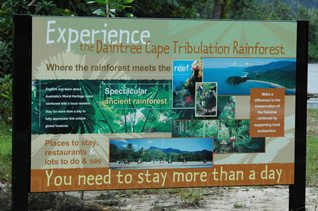
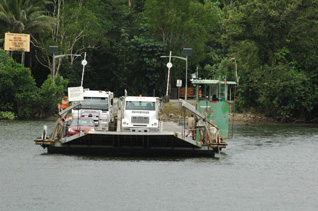
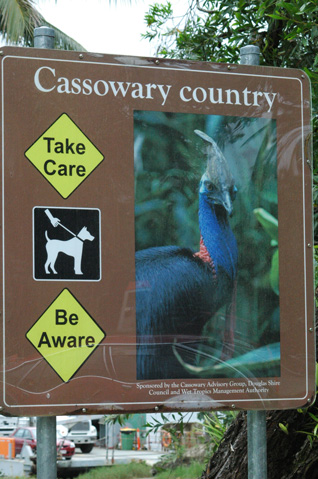
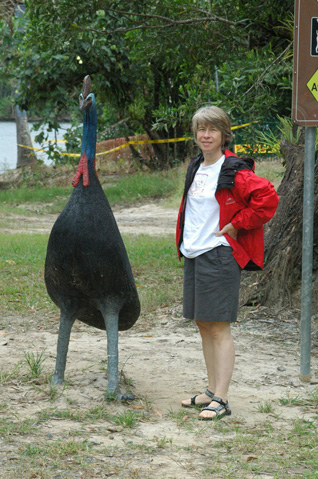
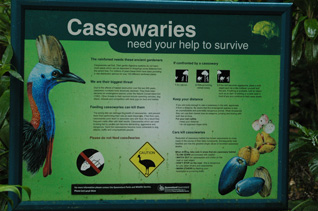
From here we crossed over into the Daintree Cape Tribulation Rainforest via river ferry. Each new rainforest brought new types of flora to investigate. Also, on this side of the river we found ouselves in Cassowary country. We had heard of this bird when we went to the Sydney zoo, but here it was wild, protected and also dangerous if cornered. It stands as high as a human and possesses a razor sharp foreclaw that can be used to eviscerate prey and foe alike. We were given plenty of warnings about this fellow.
 |
 |
|
The Daintree Cape Tribulation Rainforest |
The ferry across the Daintree river |
 |
 |
|
The warning! |
Not heeded by all, however. |
 |
 |
|
More warnings |
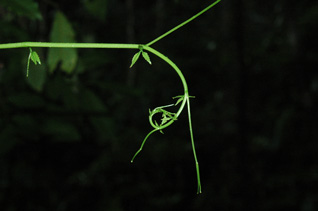
The forest reaching out to wrap you up |
 |
 |
|
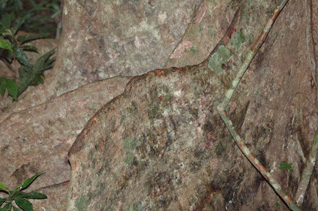
Tree butresses for survival |
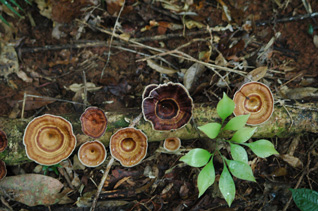
Fungal varieties in the forest |
 |
 |
|
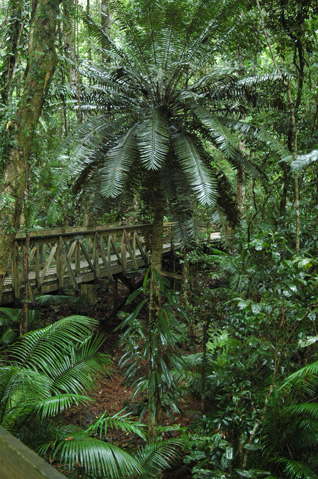
The oldest tree in this forest. It grows 1 mm per year. |
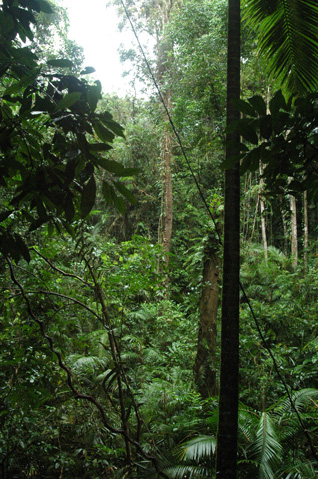
The brighter spot results from storm damage, destroying the canopy and letting more light in. |
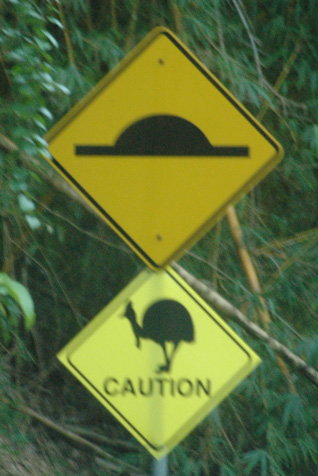
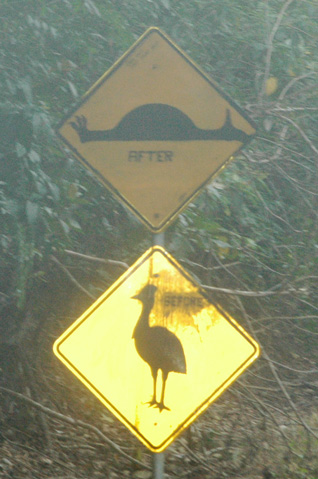
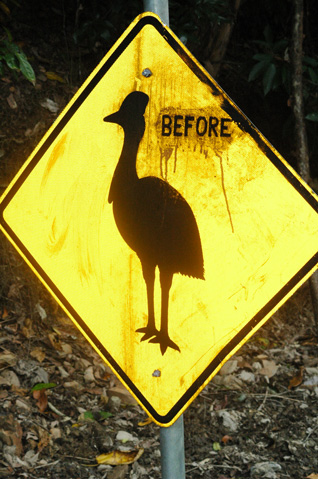
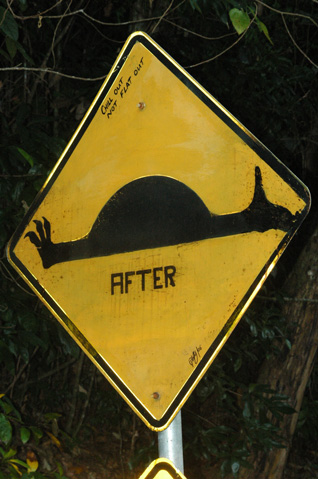
Finally, for this segment of our visit to the Daintree Valley, we were impressed by the graffiti on the road signs along our way. One particular sign had been altered in the Cape Tribulation area as you can see below.
 |
 |
|
The original sign |
The altered sign |
 |
 |
|
Close-up of "before" |
Close-up of "after" |
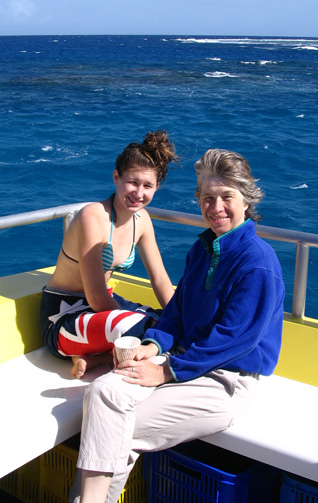
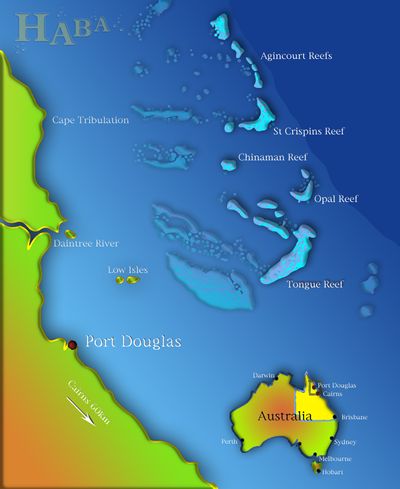 Our second day was spent on the water at Opal Reef about 22 km from Port Douglas diving in 60 ft. of water at the deepest. We selected to do three dives starting with the deepest dive first and working our way to more shallow water toward the end of the day. Fi was restricted to only two "resort" dives as she was not certified.
The weather did pay an important negative role in determining how good visibility was. Wind action and water movement over days has a stirring effect on the bottom reducing visibility because of suspended sand particles in the water around the coral. This reduced visibility to around 60 ft which, in conjunction with overcast conditions above, tended to wash out color in the fish and the coral. I remember the brillance of the Caymans, and we saw none of that this time. The sun waited till the dives were finished before showing itself.
In fact, Edite was not very interested in doing the dive in the morning when it was still raining and cold. I have grown used to this response over the years and could 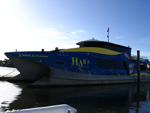 only encourage her on (with the aid of Fi) in the hope that conditions would improve as the day waxed on. Conditions did improve and she did dive, but not without some problems.
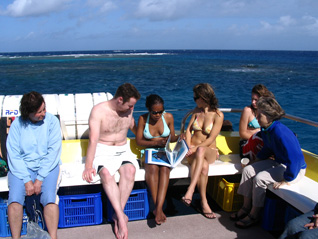
The dive vessel, owned by Haba, was a 90 ft catamaran that could easily run a 35 knots cruising speed. The waves were large enough in the morning to prevent us attaining such speeds. It was designed to carry 85 passengers and fitted with special equipment to dispatch a rescue vessel in the water during dives and a moving platform for climbing in and out of the water easily. Hot lunch was served between dives (second and third dive for us) and seating was both comfortable and efficient.
A few photos below here were all that were taken. No underwater camera was available to me, and I did not bring my good camera.
 |
 |
| The Little Mermaid | |
 |
|
|
Do I detect Joy in the air? |
Sharing the experiences |

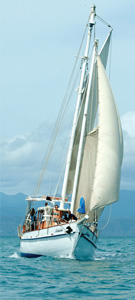 A day trip sailing to Low Island was our choice for the last day of holiday. We had spent the previous day chilling out on the beach and reading. (We thought we should do that at least one of our days.) So we were ready to do something different and interesting.
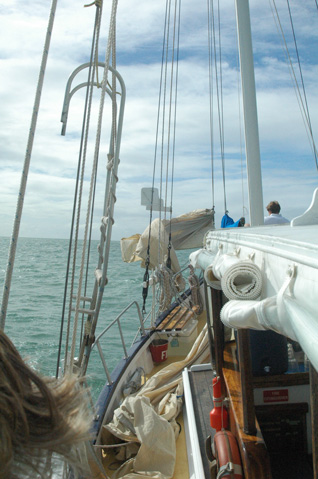
Our motel hosts recommended a smaller sized sailing tour on a 50 foot schooner called the Malaita, seen here to the left. The tour includes a sail out to the Low Islands and back, lunch and a few sessions of snorkeling. We decided to book it and prepare for the adventure.
The situation was only slightly complicated by the need to depart from Port Douglas for the Cairns Airport immediately from the dock, so we had to pack, load up the car, check out of the inn and drive to the dock. This we accomplished with relative ease.
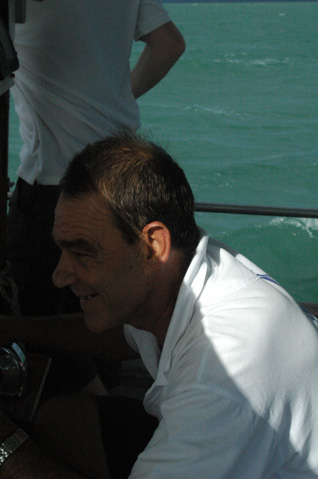
Our trip was very relaxing and enjoyable. It was again cloudly at the outset, but quickly cleared up to a sunny warm day. The sail over to the islands was great (at least for me) and we were in the water quick smart upon our arrival. Lunch followed on board after snorkeling and then after a lecture on the geology and botany and zoology of the reef, we got another opportunity to snorkel before we departed for the dock and the rush to the airport.
 |
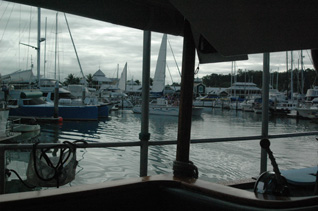 |
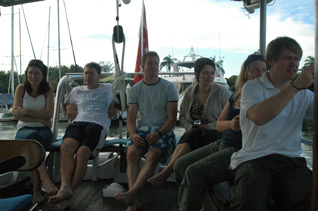
| Most of the crew | A view of the harbor |
 |
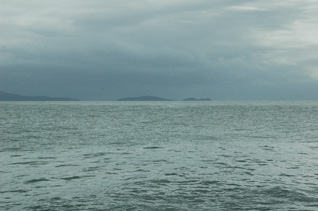 |
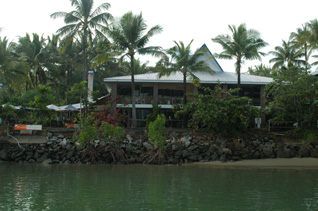
| The restaurant we ate at the previous evening | Snapper Island, Looks like a Croc. |
 |
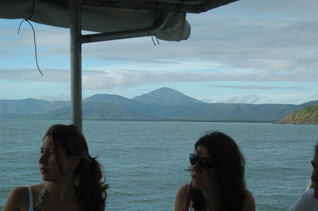 |
| Mountains in the distance | ...and more mountains |
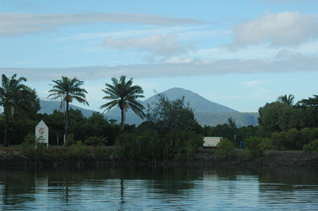 |
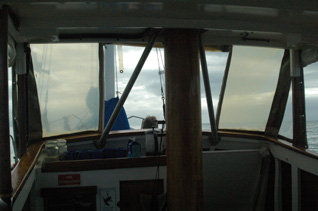 |
| Another harbor view | The inner cockpit |
 |
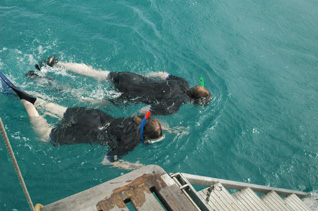 |
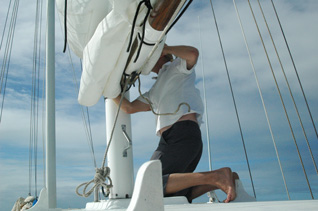
| Shipping the main | Snorkeling by the boat |
 |
 |
| Beauty #1 | Beauty #2 |
 |
 |
| Captain Hook | The port side view |
So, we were off to the airport in bathing suits. After arrival, car turn-in, a quick toilet clothes change and airline check-in, we were off to the colder climes of Melbourne with our holiday at an end.
|
Daintree Valley |
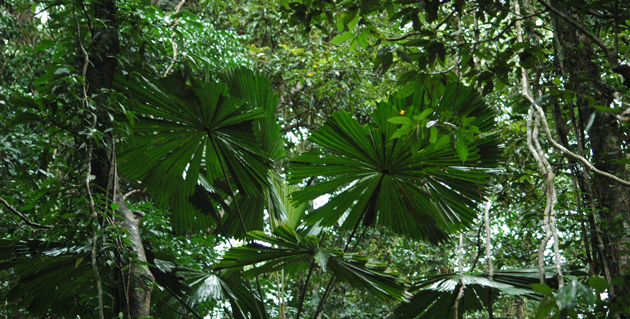
 rainforest.
 We flew into Cairns from Alice Springs, picked up a hire car, and
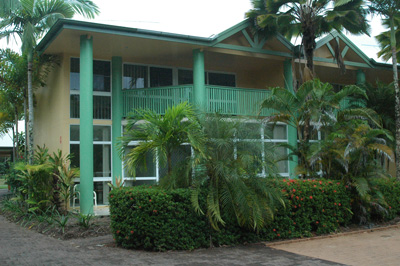
  drove to the coastal city of Port Douglas where we had laid reservations
  at a lovely motor inn called
 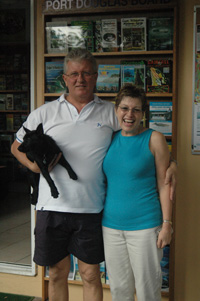 Fi, in particular, was looking for an opportunity to log some beach time with sun. I was looking to visit the Great Barrier Reef, and Edite was hot to explore the region. To address these individual desires, we spent the rest of our first afternoon and evening planning. We were graciously helped by the manager team of the motor inn, Robert and Elaine Cheek, a husband, wife and puppy (Missy) team that recently assumed ownership of the business and were anxious to assist us decide what we wanted to do. They offered the added bonus of being able to book all of the activities for us so all we needed to do was to listen to their recommendations and decide.
 Our first choice was to familiarize ourselves with the region by taking a
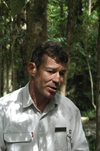
  I must confess that the amount of information we received about the area was just too much to remember. Nick was rich with detail with virtually no repetition. Needless to say, it was all very satisfying and interesting.
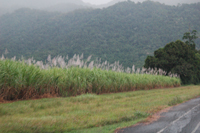
 The most striking aspect of this region is the weather. It is tropical most of the year in temperature, and the entire year in terms of rainfall. We visited two distinct areas of the rainforest, one with a beautiful waterfall, and one with very old and well developed flora. Much of the land is dotted with Aboriginal
  settlements that are now controlled by the native population.
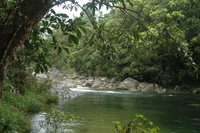 Mossman Gorge is located within the Daintree National forest and is an important tourist site. It was formed by the Mossman river that dug the gorge over thousands of years. It is a typical rainforest for the region with slightly different characteristics at the top of the ridges where it is referred to as a stunted montane rainforest. The river makes a popular swimming spot since it is free
 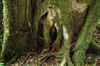 of the dreaded crocodile. One of the interesting features we discovered
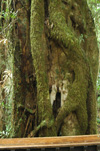
 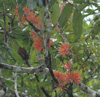 there was the infamous fig tree. This is a parasite type of tree that grows over many years around its host until it completely robs it of the necessary light to sustain life. Over years, the host rots away leaving a hollow center to this structure. It is quite a sight to see. Occasionally, among all of the green ferns and mosses one finds a flower of brilliant color.