|
A Visit to Sydney
Our first long distance tour since we arrived took shape in January prior to the end of the summer school holiday. We were looking for something that would include Fi and take advantage of the last week of her vacation. Sydney seemed the ideal choice: it was too far to drive, but not too far to fly cheaply. It offered enough to hold our interest for four or five days and still allow us the opportunity to return to do more.
We spent one Sunday afternoon and early evening searching on the Internet for the best hotel and the cheapest flight for three. After a pretty exhausting search, we found what we were looking for and booked the tour. We would be leaving early in the morning from Melbourne, landing in Sydney and taking a train from the airport to the Circular Quay area where our hotel was. We would stay four nights and five days, leaving around 6:00 PM on a Sunday for Melbourne and home. The execution was flawless.
The City
 Sydney is an international city. At the same time it is a relaxed city, much less formal than Melbourne seems to be. Being further north it is warmer and more humid. As such, it tends to feel more like home than cooler and drier Melbourne does. The aquatic nature of the city center, being right on the harbor, also gives it a feel more like Connecticut than Melbourne, which is also on the water, but a much larger body of water. Sydney is an international city. At the same time it is a relaxed city, much less formal than Melbourne seems to be. Being further north it is warmer and more humid. As such, it tends to feel more like home than cooler and drier Melbourne does. The aquatic nature of the city center, being right on the harbor, also gives it a feel more like Connecticut than Melbourne, which is also on the water, but a much larger body of water.
The city also has a more touristy flavor to it. There seems to be more activity geared to the tourist trade and much less activity geared to everyday life. There are a large number of hotels near the central part of the city and lots of fast food places. The transit system is very well developed, a consequence of the Sydney Olympic games some years back.
There are organized walking tours, museums and activity centers such as boat charter docks and speed boat rides all catering to the tourist trade. The buildings are clustered around the Circular Quay area and these are very tall and modern looking. The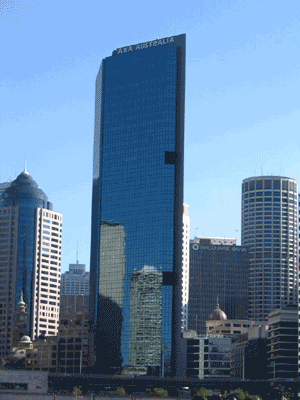 building depicted here on the right was used in the movie, The Matrix. You might recognize it if you have seen the original movie. building depicted here on the right was used in the movie, The Matrix. You might recognize it if you have seen the original movie.
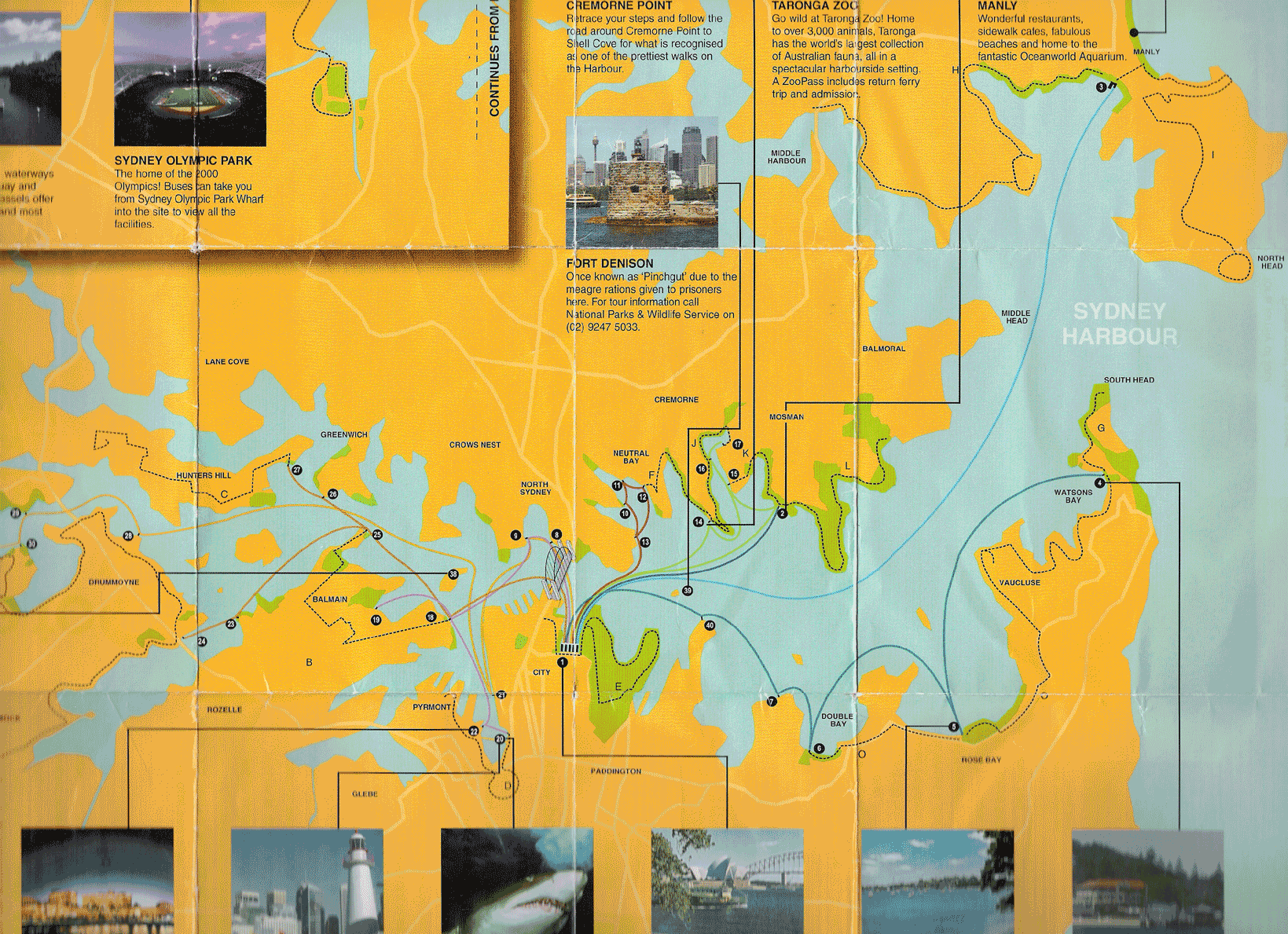
The city is organized around the water. Its suburbs are accessible by an extensive ferry system that is much like a taxi service. People commute to work using these ferries and commingle with the considerable tourist trade. Of course the suburbs extend out well beyond the water, and for them there is a bus and train network that is also well developed and easy to use. The stations we visited were quite clean and free of graffiti for the most part. There was no evidence of poverty similar to that seen in the US nor were there any homeless folks to find begging on the streets. The Circular Quay area was host to lots of street performers of all sorts, but even they were up-market in a funny sort of way. Police presence, while there, was minimized. Curiously, the taxis in the town had light bars on them (minus the red and blue flashing light apparatus) so they appeared to look like police cars. I thought it was a cleaver idea in that it makes the police presence seem higher than it really is.
The Darling Harbor area, one harbor west of Circular Quay was very well developed and was home to many shops, eateries and the Aquarium. We found it to be the night spot of Sydney. Folks seemed to gather for a drink after work around the extensive set of night spots to the point that people were spilling out onto the quay just beyond the edge of the table area of the restaurants. Young and old would wander up and down the dock area checking out the scene and shopping in the stores interspersed among the restaurants.
A s a tourist town with many international folks on the move, it seemed prudent for the city fathers to protect their guests who came from those places that use the right, rather than the left side of the road to drive. The painted warning on the street at curbside here is an indication that, perhaps, there were a few too many accidents involving these uninitiated pedestrians and moving vehicles. When we first got to Melbourne, we too had to learn to look right lest we meet with an unfortunate demise. s a tourist town with many international folks on the move, it seemed prudent for the city fathers to protect their guests who came from those places that use the right, rather than the left side of the road to drive. The painted warning on the street at curbside here is an indication that, perhaps, there were a few too many accidents involving these uninitiated pedestrians and moving vehicles. When we first got to Melbourne, we too had to learn to look right lest we meet with an unfortunate demise.
The Aquarium
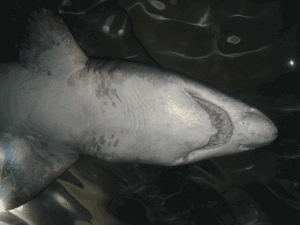 The Aquarium was a real hoot except for the hordes of unruly children who's parents seized upon the same notion we did: an indoor activity would be the best way to spend a rainy day. However some of them also wanted to make the Aquarium their surrogate baby sitter, while they went into mental vapor lock for the afternoon. Hence the unsupervised children. Fortunately, the quality of the event far outweighed the inconvenience of the small fraction of these children. The Aquarium was a real hoot except for the hordes of unruly children who's parents seized upon the same notion we did: an indoor activity would be the best way to spend a rainy day. However some of them also wanted to make the Aquarium their surrogate baby sitter, while they went into mental vapor lock for the afternoon. Hence the unsupervised children. Fortunately, the quality of the event far outweighed the inconvenience of the small fraction of these children.
The aquarium was first rate, a world-class exhibition. Representative species from all parts of Australia were present. Three large tanks with glass tunnels through their bottoms and containing the more attractive and provoctive species offered the opportunity for visitors to walk and better view these creatures. It was spectacular! In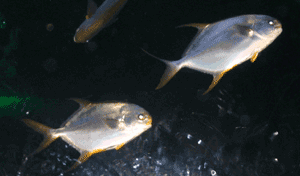 addition to these tanks, there were nice displays of marine life of the Great Barrier Reef and less inviting aquatic life of the Northern Territory and Queensland. I am referring to a particularly good exhibit of crocodiles and sharks. This is the sort of place you want to come back to often and memberships are offered to be able to do just that. addition to these tanks, there were nice displays of marine life of the Great Barrier Reef and less inviting aquatic life of the Northern Territory and Queensland. I am referring to a particularly good exhibit of crocodiles and sharks. This is the sort of place you want to come back to often and memberships are offered to be able to do just that.
We were fascinated with the large sharks and brightly colored tropical fish. Seals and sea lions were also on display. Watching them swim was fascinating. They can surely move gracefully and quickly. The layout of the aquarium was such that there was no line to wait in unless you wanted to walk through the glass tunnels under the large tanks. That line was caused by the folks that paused to take in the beauty of the swimmers. The tunnels were just too narrow to accommodate more than two lines of people. The end of the exhibit took you out through the gift shop. They don't miss a trick.
The Rocks
This area of downtown is the oldest part of the harbor and takes its name from the geological formation upon which all of the buildings sit. It was the poorer part of the city in the early settlement time and the section where the population density was the highest. 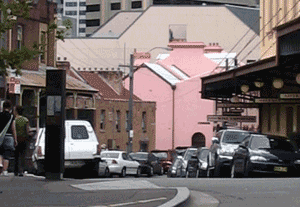 Today this area is largely an outdoor museum speckled with shops and the Sailors Retirement Home. Most of our knowledge of the area was gained on a walking tour we took. We wanted to get a better idea of what the city was like in the 1700's during the founding time. Our guide, fresh back from holiday, was quite vociferous about the subtlities of life in 1788 and beyond. She spoke and showed pictures of the early history and the usage of some of the existing buildings. She led us up and down steps looking at various noteworthy sites and streets recounting events of importance that transpired. Some of the sections we saw still evinced a remnant of the old city such as the picture here. The curvy road and the brick and pink buildings were all part of the old city. It is clear to us that life was hard for Captain Phillips and the first fleet in 1788. His dropping of the anchor on January 26th of that year established the city of Sydney and Australia Day which has been celebrated ever since. Today this area is largely an outdoor museum speckled with shops and the Sailors Retirement Home. Most of our knowledge of the area was gained on a walking tour we took. We wanted to get a better idea of what the city was like in the 1700's during the founding time. Our guide, fresh back from holiday, was quite vociferous about the subtlities of life in 1788 and beyond. She spoke and showed pictures of the early history and the usage of some of the existing buildings. She led us up and down steps looking at various noteworthy sites and streets recounting events of importance that transpired. Some of the sections we saw still evinced a remnant of the old city such as the picture here. The curvy road and the brick and pink buildings were all part of the old city. It is clear to us that life was hard for Captain Phillips and the first fleet in 1788. His dropping of the anchor on January 26th of that year established the city of Sydney and Australia Day which has been celebrated ever since.
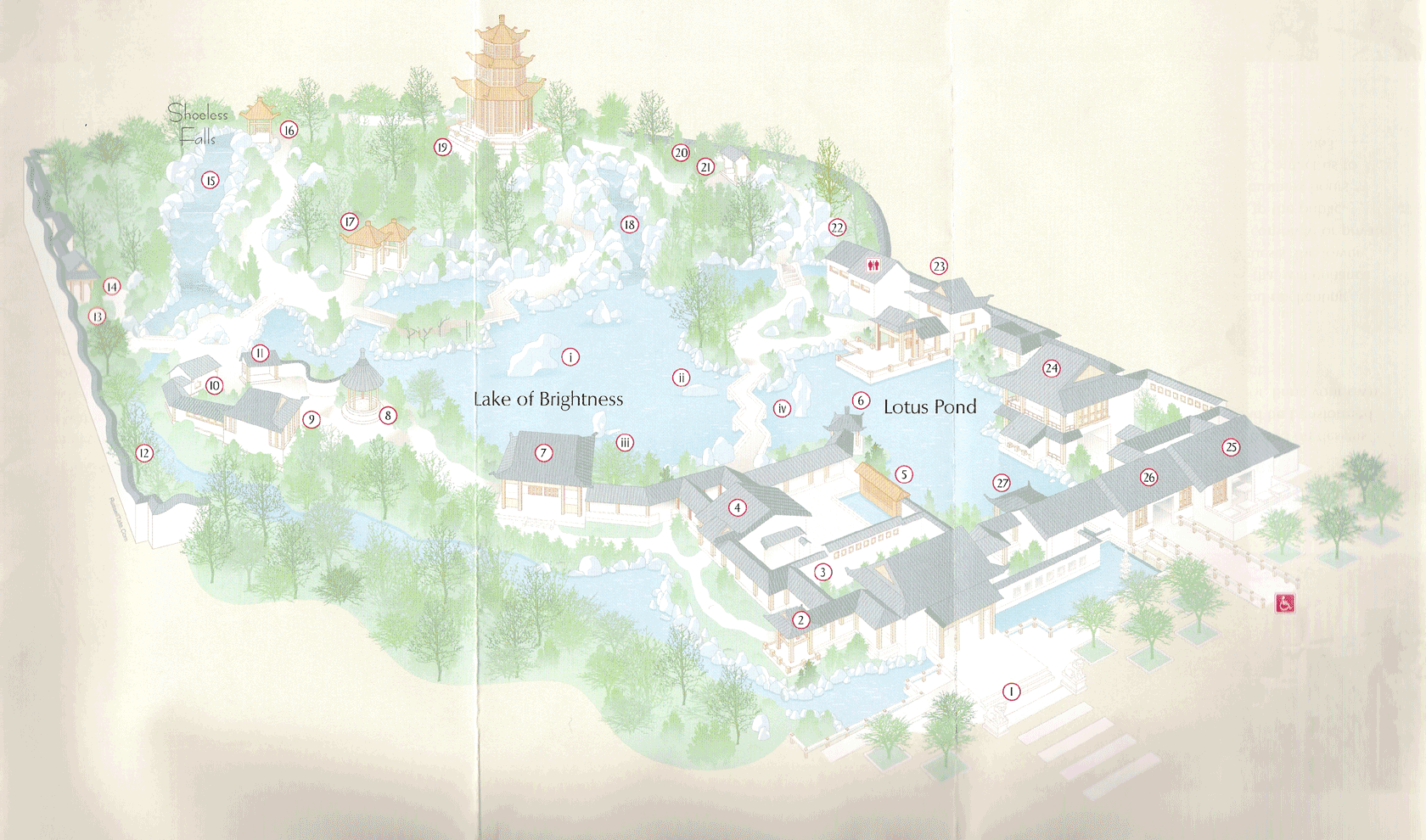
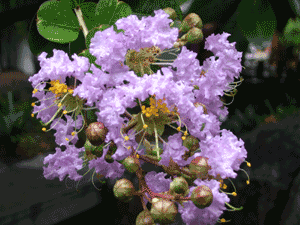 Back in Melbourne while we were looking for a hotel, we found on the maps reference to these lovely gardens. We ultimately chose a hotel closer to the action of Circular Quay, but we, nevertheless, had been attracted to this place and decided to pay it a visit during one of the rainy days of our trip. Back in Melbourne while we were looking for a hotel, we found on the maps reference to these lovely gardens. We ultimately chose a hotel closer to the action of Circular Quay, but we, nevertheless, had been attracted to this place and decided to pay it a visit during one of the rainy days of our trip.
It was located just south of Darling harbor right in the middle of residences and businesses. It seemed like an oasis in the middle of a chaotic jungle. Surrounded by tall buildings, the confines of the gardens offered a bit of peace and serenity to its visitors.
The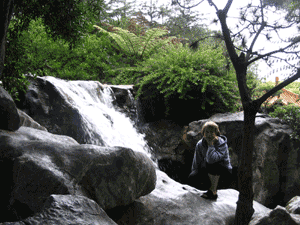 gardens are organized in a circular fashion with well labeled buildings representing various themes relating to peace and harmony. There was a constructed waterfall at one spot and Edite got it into her head that she wanted to have her photo taken on the rocks along the top of the falls. I was less keen on this idea, but said nothing. However, after the shot I moved quickly over to her to assist in the dismount noting that the rocks were wet and probably slippery. It might have been my intervention that actually caused the shoe to dislodge from her foot, but whatever the cause, it did and went over the side. It was beginning to look as though it was going to be a very long walk (or should I say hop) back to the hotel room for Edite. Fortunately, I was able to make my way down to the bottom of the falls and walk through the gardens are organized in a circular fashion with well labeled buildings representing various themes relating to peace and harmony. There was a constructed waterfall at one spot and Edite got it into her head that she wanted to have her photo taken on the rocks along the top of the falls. I was less keen on this idea, but said nothing. However, after the shot I moved quickly over to her to assist in the dismount noting that the rocks were wet and probably slippery. It might have been my intervention that actually caused the shoe to dislodge from her foot, but whatever the cause, it did and went over the side. It was beginning to look as though it was going to be a very long walk (or should I say hop) back to the hotel room for Edite. Fortunately, I was able to make my way down to the bottom of the falls and walk through the 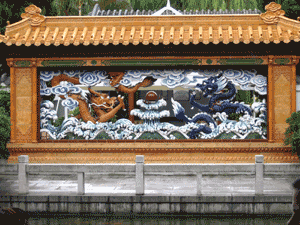 undergrowth to the water's edge where the shoe was resting peacefully just bobbing up and down in the tranquil ripples emanating from the bottom of the falls. In an instant, life was good again. The universe came back into harmony. It must have been the gardens. undergrowth to the water's edge where the shoe was resting peacefully just bobbing up and down in the tranquil ripples emanating from the bottom of the falls. In an instant, life was good again. The universe came back into harmony. It must have been the gardens.
After making the complete circuit of the gardens, we decided to spend a bit more time in the canteen of the gardens taking some lunch. The tables looked out over the lake that lies at the center of the entire garden. Close to the entrance side of the lake we could see large gold and white fish swimming around in search of food. There was also a young man dressed in what looked like a typical Chinese shirt and trousers doing what looked like Tai Chi. It was all very entertaining.
The Zoo
Sadly, wh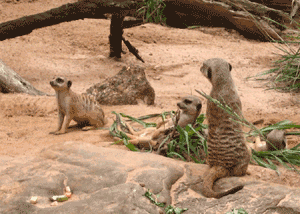 en compared to the three Zoos in Melbourne, the Sydney Zoo was sub-standard. Its condition was such that it was showing its age. Exhibits were in need of maintenance, some were left empty with no indication of why and others were poorly laid out for viewing. One could see that it was once very nice. There was evidence of recent construction in spots, so, perhaps the zoo was in transition. Only one major opened exhibit, the Jungles of Asia, was new, and while it was in very good shape and up to the usual Ozzie standards for exhibits like these, it was still missing some of the animals due to quarantine. We were told that the missing elephants were on the way. Given time, this zoo could be on an equal par with the best in the country. en compared to the three Zoos in Melbourne, the Sydney Zoo was sub-standard. Its condition was such that it was showing its age. Exhibits were in need of maintenance, some were left empty with no indication of why and others were poorly laid out for viewing. One could see that it was once very nice. There was evidence of recent construction in spots, so, perhaps the zoo was in transition. Only one major opened exhibit, the Jungles of Asia, was new, and while it was in very good shape and up to the usual Ozzie standards for exhibits like these, it was still missing some of the animals due to quarantine. We were told that the missing elephants were on the way. Given time, this zoo could be on an equal par with the best in the country.
The zoo was built upon a hill with the general layout designed to have visitors start at the top and work their way downward to an exit at the bottom where the ferries arrived and departed. There were buses at the bottom to bring the ferry arrivals up to the top. Alternatively, a chair lift ride was available at the bottom. As one proceeded through the park, a city view provided the backdrop; a nice touch, I thought.
The Bridge Climb
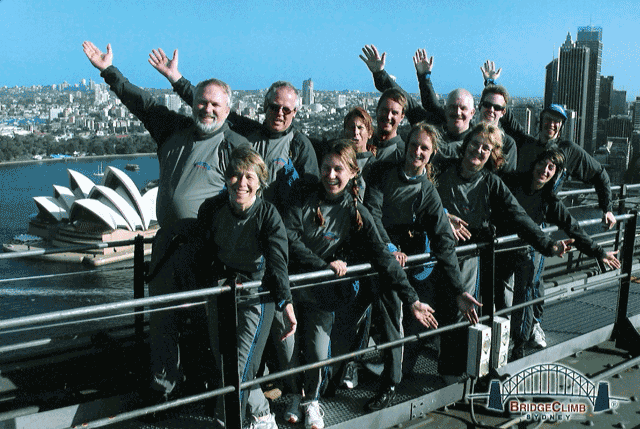
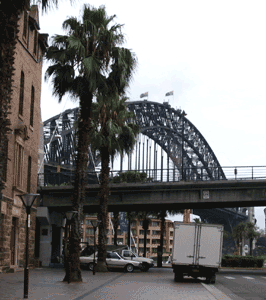 To my way of thinking, the best activity we did was the Bridge Climb, a three and one half hour activity that takes you to the very pinacle of the harbor bridge that spans the harbor linking the south to the north and can be seen in the photo to the left. As such I think it deserves a lengthy description which follows: To my way of thinking, the best activity we did was the Bridge Climb, a three and one half hour activity that takes you to the very pinacle of the harbor bridge that spans the harbor linking the south to the north and can be seen in the photo to the left. As such I think it deserves a lengthy description which follows:
You begin the adventure at the induction office where you climb a set of steps to what is essentially the salesroom. A counter with three or four stations awaits you to decide if you are willing to spend the time and money for the climb. Rates vary according to time of day and age, the twilight climb being the most expensive at $245 per adult and ranging down to $160 per person for a day or night climb. For those who have difficulty making up their mind, there is a wall of photos of celebrities who have done the climb: Matt Damon, Will Smith, Zazu Pitts, etc.
Once you have paid and your apointed time as been reached, you present yourself at the assembly door and are herded into a small room. We were asked to sign a consent form and given a Breathalyzer test (no alcohol consumption permitted prior to the climb). After viewing a short video of what we were to expect, we proceeded to the next room where we stood on little yellow circles painted on the floor so they could size us up for the jump suits we would be issued. We also got to introduce ourselves to the other members of our climb group, twelve in all. While we checked to see if the size of the jump suit was correct, we were instructed on the need to remove all jewelry, including watches, large earnings and such. Basically, they did not want anything that could fall off and cause damage when it came to rest below. We would be issued hats, handkerchief, and whatever else we needed. Dressing rooms were provided in the event someone wanted to have nothing under their jump suit. We were also issued lockers with keys to put our belongings in, including wallets, money, cameras, etc. Very little was left to chance
At the next station we were issued our belts, handkerchiefs and hats. followed by a practice session on a ladder and ramp arrangement similar to what we would encounter on the bridge. This would expose us to the type of structures we would be negotiating on the bridge and expose some of our phobias to the staff so they could pay special attention to them during the real thing. At the final station we were issued portable radio receivers so we could hear the guide's instructions and explaintions during the climb.
We were now ready to go; and up we went. We snapped on to the stainless steel line at the bottom of the bridge and didn't get off it until we were back at the same spot on the other side. We progressed along the under side of the bridge until we got over the water and to the large vertical girder supporting the arches. We then started up four sets of ladders, each with 27 steps and shifted slightly from each other so one could not fall down more than one set at a time. At the top of the second ladder we came up between the road surface of opposing traffic on each side. Continuing up the next two sets of steps led us to the top of the stanchion and on to the top side of the curved part of the arch where it meets the stanchion going up to the peak of the bridge. At this point we were at the easy part, as it was like climbing a shallow set of steps. We proceeded up a short way and then rested while the guide gave us information on various aspects of the bridge's history: how it was constructed, how long it took, how they got the two halves to meet in the middle, etc. We were not long up there either. There were other groups present, one going up every fifteen minutes. The pauses were designed to allow pictures to be taken by the staff for sale later when you were most vulnerable to the exorbitant prices. The view was great too.
Slowly we made our way to the peak of the arch where we paused for the picture you see at the head of this page. We crossed over the road bed far below to the other side of the bridge and started our descent back to the bottom. At the apex we were some 524 feet above the water surface. The trip down was also full of pauses to further relate history of the construction process and some of the local politics that surrounded the project. At the end of the climb after we disrobed and turned in our gear, we were given a picture and a certificate of accomplishment to certify that we had officially completed the bridge climb in Sydney. Then came the opportunity to purchase those pictures taken in various poses while we were resting on the arch. In our case, we declined because the pictures taken were not different enough from the complimentary one to justify the cost. I can truly say that this activity was the high point of our Sydney visit.
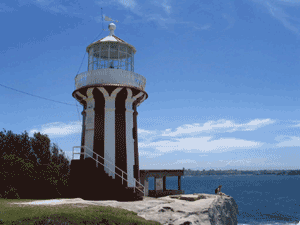  Watson's Bay is located on the southern head of the harbour entrance from the ocean. It is the final stop on a five stop leg of the extensive ferry system originating at Circular Quay. From the small ferry wharf it is a short walk on town roads to an extensive park that encompasses the entire point of the head. Watson's Bay is located on the southern head of the harbour entrance from the ocean. It is the final stop on a five stop leg of the extensive ferry system originating at Circular Quay. From the small ferry wharf it is a short walk on town roads to an extensive park that encompasses the entire point of the head.
The lighthouse that stands on the ocean side of the point was constructed in 1858 as a result of the tragic loss of two ships in separate incidents a year earlier during foul weather. In the first incident, the Dunbar ran up on the rocks while trying to enter the harbour at night during a storm. All but one of the 122 people aboard perished. The sole survivor, 20 year old James Johnson, was saved by being washed up on a rock ledge and would later become the first lightkeeper. The lighthouse went through a few changes over the years mostly replacing the light technology from candles to gas lights to electric lights as time progressed. It was acquired by the army during the war and used for barracks after the war. In 1996 a restoration was undertaken after the property was acquired by the parks service. Today it is still operating.
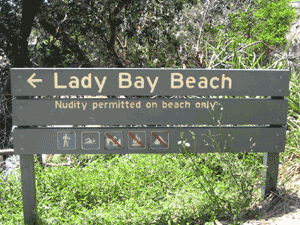 The other notable feature of this area of Sydney Harbour is depicted on the sign below. It is a curious attraction and quite amusing to watch the faces of other tourists as they peek down from the walk onto the beach and realize that all of the people below are stark naked. One must wonder if the looks and expressions reflect the beauty of some on the beach or, perhaps, quite the opposite. One thing is certain: Australians are not shy when it comes to nudity. The other notable feature of this area of Sydney Harbour is depicted on the sign below. It is a curious attraction and quite amusing to watch the faces of other tourists as they peek down from the walk onto the beach and realize that all of the people below are stark naked. One must wonder if the looks and expressions reflect the beauty of some on the beach or, perhaps, quite the opposite. One thing is certain: Australians are not shy when it comes to nudity.
Bondi Beach
Bondi beach is unique in my experience, the sheltered lad that I am. Surfing was quite common, and most wore wet suits to prolong their contact with the water and protect the skin from contact with boards and the bottom. There were lifeguards about, who were generally organized as lifesaving clubs rather than employees of the city. Topless sun bathing was common (a delightful idea in most cases) and families, couples and singles intermingled with ease. Such a situation might be seen in California, but I would not know about that.
It was hard for us to take in this sight and know that just under the surface there was social unrest in the form of ethnic prejudice that erupted into violence not more than a month prior to our visit. It explained the very high police presence along the drive in front of the beach and made us wonder if there were plain clothed police on the beach posing as sunbathers. (I did see a female with two 45's, but I was not sure she had a gun as well.)
The edge of the sandy portion of the beach is ringed with a walkway system that runs from cove to cove. We walked two of these coves and noted that the activity was virtually the same on either beach. The dominate activity, other than sunbathing, was surfing. This is a very ozzie thing to do. We were told that Bondi Beach was the first beach in Australia where a surf lifesaving club was established. They exist everywhere now.
|
|