
|
|||||||||||||||||||||||||||||||||||||||||||||||||||||||||
 |
 |
 |
|
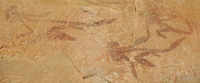
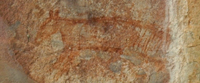
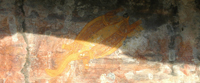
The wall painting |
Wall painting of Thy la cine |
Wall painting of a fish |
 |
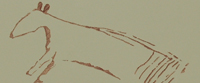 |
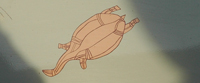 |
|
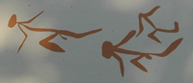
Artists rendering |
Artists rendering |
Artists rendering of the fish |
The view from atop the plateau of Nadab Lookout above the site was quite expansive and 360 degrees as advertised. Sadly, the day we were there was a day of heavy burning of brush resulting in a smoky haze which settled over the entire region and obscuring the view. The brush burning program is preventative in nature, the thought being that if you let small fires burn the dried brush away on a regular basis, there is no build up over time to cause a really large and uncontrollable fire should one start naturally. It was just out bad luck.
 This concluded the day's organized sightseeing activities and brought us to the camping
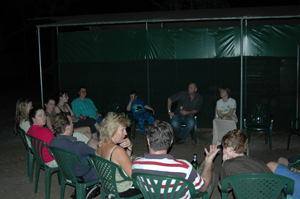
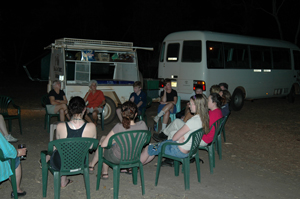
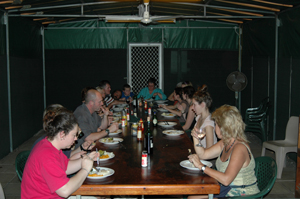
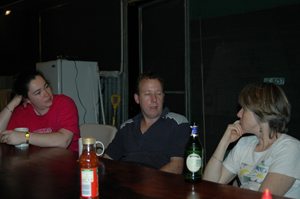
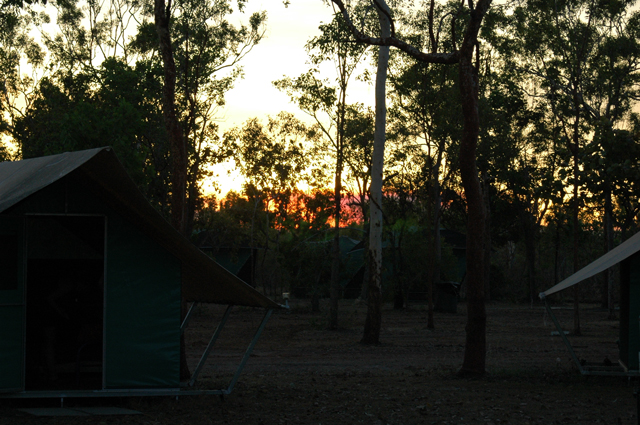
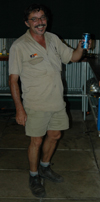 portion of the day. The campsite was nearby in a town called Jabiru and was "chock-a-block" with campers. Billy Can Tours has a permanent site set aside for them with nice sleeping tents plus a mess tent across from permanent toilet and shower facilities. Despite the presence of a couple of huge buses of high school aged children, the site was pleasant and relatively quiet. We set up camp, chose a tent to stow our gear (two to a tent) and began to prepare dinner and relax. This was the first real chance we had to get to know the other tour participants. We sat around the front of the mess tent with refreshments and yaked about the day's events, what we each did for a living, where we were from and other bits and pieces of our existence. We also got to watch the sun set through the trees. Andy, our Swiss guide, was the chief cook and raconteur.
 |
 |
|
Gathering in front of the mess tent. |
More pre-dinner conversation |
 |
 |
|
Dinner Kakadu style |
Convivial post-dinner conversation |
And the sun sets on our first day in Kakadu.
The next morning started early. We were up before dawn in order to eat and get underway to keep to our schedule. Our first stop was the Ngurrungurrudjba (Yellow Water), a billabong on the South Alligator River floodplain. This is a favorite tourist stop because of its expansive beauty and diverse wildlife, chief among which are water fowl. We saw wild horses (brumbies) in the distance, but no corcodiles. (Doubtless they were there, however.)
 |
 |
 |
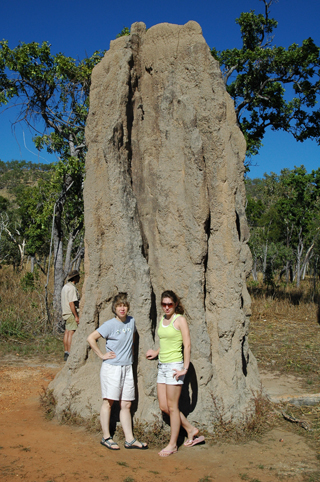 The visit here was not long. We were on our way to a waterfall swimming hole hidden from the main road. Along the way we stopped to investigate structures we had seen along the road as we traveled from Darwin. These large structures are termite mounds. They vary in size from a few inches in height to the huge monster you see here to the right.
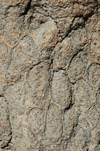 Termites play an important role in the ecology here in this alternating wet/dry environment. They stand as an important source of protein for other wildlife. They start by consuming a dead tree and continue to grow long after the tree is consumed. These large towers are very very old. The outside of the mound is textured as you can see to the left here. When the top of the mound begins to round out, it is a clear signal that the mound has died and is eroding.
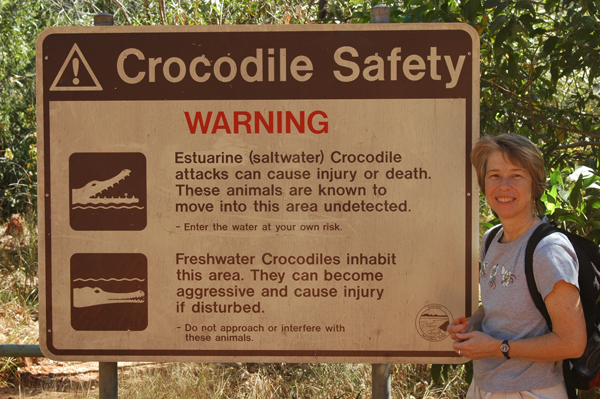
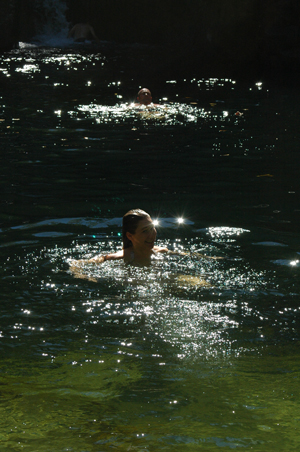
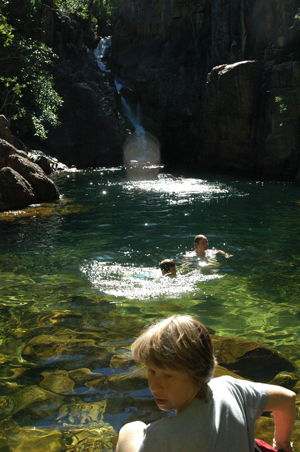
Well, anyway, there is the swimming hole to consider. As we walked down the path toward the spot, there was a sign posted that gave some pause for thought. As you can see, it did not have a very great impression upon the tourists. The water was quite refreshing and all had a great swim. It would not be the last for the day, however.
 |
|
|
Hmmmmm. |
|
 |
 |
|
No fear or no brains? |
At least the water is clear enough to see him coming. |
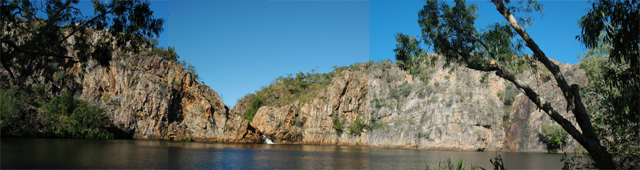
After a stop for lunch at a roadhouse picnic area, we proceeded to the Pine Creek area where we stopped for another swim, this time at Edith Falls. This beautiful spot afforded us an opportunity not only to swim, but to hike to the top of the falls where there was more swimming and to just relax in the warm sun and enjoy the day. Edite opted not to swim this time, but instead, chose to hike up the falls. I did elect to swim along with Fi, and we worked our way over to the falls seen in the center of the photo above. There was a significant current at the bottom of the falls that swept us to the right making it difficult to actually sit at the very bottom of it. Nevertheless, the view from head-at-water height was just super.
Our final stop took us to our campsite at the Springvale Homestead. It was much the repeat of the previous night with the difference being in the degree to which we had become familiar with our tour mates and the nighttime temperature, some ten degrees colder. So ended our second day.
 |
 |
|
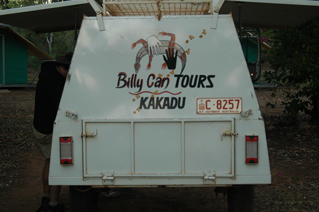
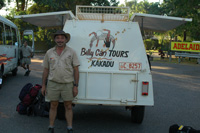
Our trusty trailer |
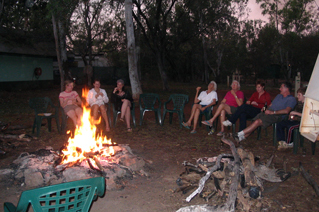
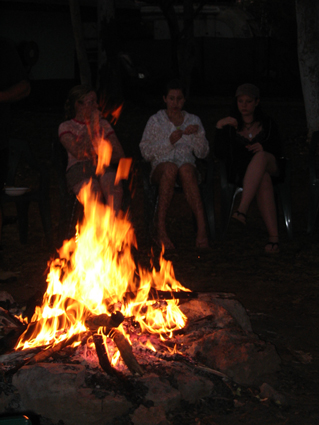
Campfire chatter around cocktails |
 |
 |
|
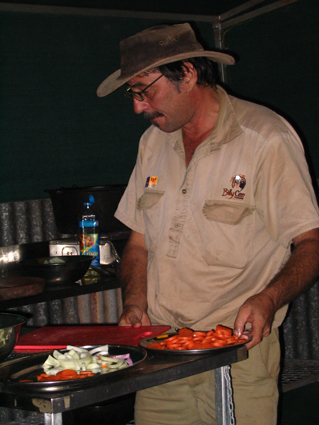
Our master chef, Andy |
Fi and her new found friends sharing the burning gos |
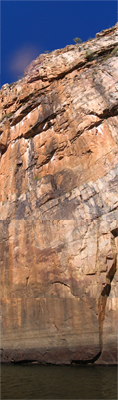 We were up at dawn again to prepare for departure and clean the campsite. We were setting off to visit a place called Katherine Gorge. It was to be a day of canoeing and kayaking within the gorge. We donned our swimsuits and broke camp paying special attention to packing towels and sunscreen separately.
Upon arrival at the gorge park, we walked, some barefoot, down to the dock area where we were each issued a lifevest, a paddle and then sorted into pairs for the assignment of the canoe. The rest was up to us. For those in the group that did not want to get their collective bottoms wet, there was the option of a boat ride on the gorge river in the same direction that we were to go.
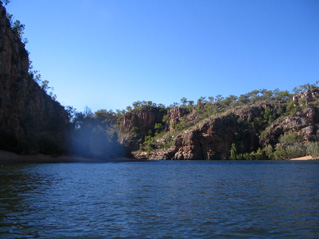
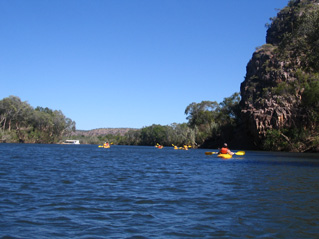
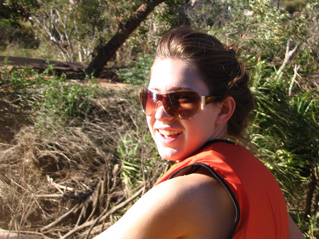
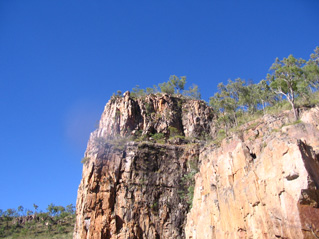
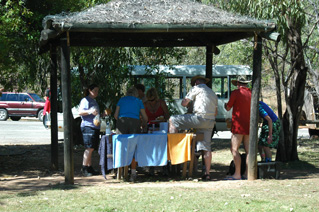
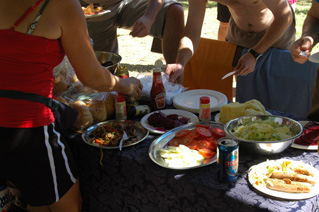
The canoers more or less stayed as a group and made the way up the gorge to a small set of water falls. We were required to portage over them which proved to be a challenge for my bare feet on slippery rocks. It was slow going, but I managed and, with the Edite's patience, we got to the top and over. We continued up the second half of the gorge to its effective end. Some of the more tan-conscious among us decided to remain close to the top of the falls and sun themselves on the rocks or go swimming. Our guide, Andy, made a point of not proceeding further up the gorge as he needed to keep rested for the road trip that he and we were faced with in the later afternoon. After a few hours we all headed back to the landing to return our equipment and indulge in a feast of buffalo burgers and salads in the adjoining park. The pictures help tell some of the story.
 |
 |
|
A view up the gorge |
The group working their way toward home |
 |
 |
|
Fi in full bloom |
The sights of the gorge |
 |
 |
|
The picnic site |
...and the main event |
 |
 |
|
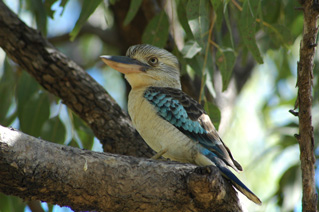
The indigenous blue winged Kookaburra |
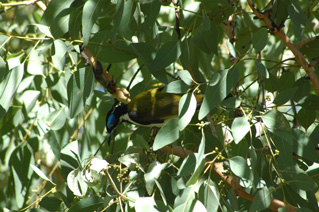
A Blue-Faced Honeyeater |
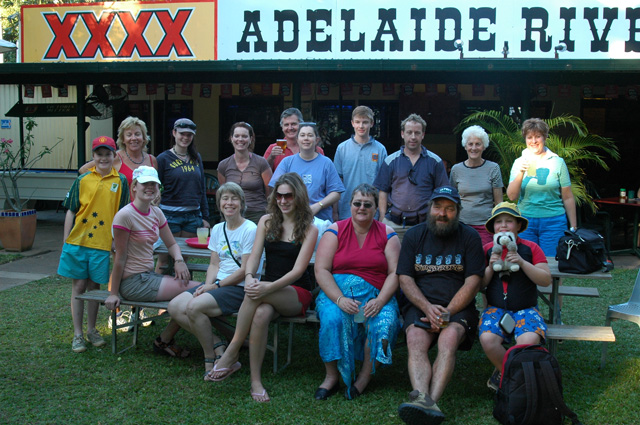
 So, our Kakadu adventure came to an end after the picnic. We made our way up the highway back toward Darwin. Some of the folks on the tour were moving on to the fourth day at a campsite along the Adelaide River, while others, like us, were heading to the rest of their trip. The rendezvous point was a small town called Adelaide River. We stopped for a drink and a stretch and to transfer to a different bus. The group parted after a few group photos. We were then on the road toward the second leg of our journey, the road to Alice Springs.
|
Kakadu |
|---|
 Our 2 AM arrival at the Hotel in Darwin coincided with the playing of the World Cup Soccer match of Australia and Japan. With a 7:00 AM pick-up time the next morning, it hardly seemed worth getting the two hours sleep after the match ended, Australia being victorious despite the unjust call by the ref early in the game resulting in a score for Japan. Nevertheless, we set out clocks for 6:30 AM and proceeded to attempt to sleep.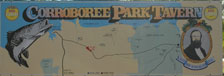
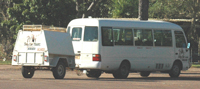
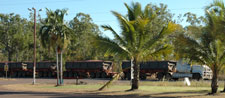 where we were able to use toilets, get a bite to eat and stretch our legs. While out front of the place, I was able to get my first glimpse of a "road train", as can be seen in the picture to the left. We saw up to four trailers connected to one tractor moving down the road at breakneck speed. Fortunately, the roads were virtually empty so there was plenty of stopping distance for this beauties
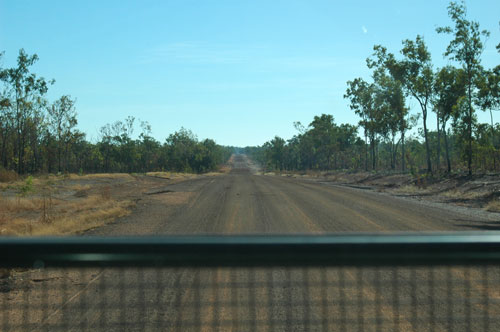 country was not tropical rainforest in any way that I had ever experienced. No jungle here! Although warm enough most of the year, there are distinct wet and dry seasons that inhibit the ability of the vegetation to remain lush and green. The extended dry season in the winter causes many of the grasses to die back. Bushes and shrubs also do not get to grow continuously. The result, which is seen through the windscreen of the camper bus above, is a more barren look of the place than I had expected. (Note the screen below the bar in the picture. This is to catch rocks that might fly up from the road surface.)
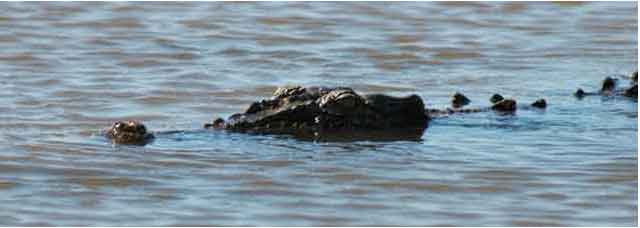
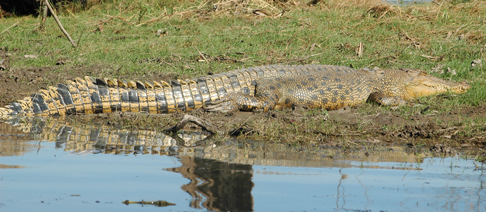 As cold blooded animals, they need to warm themselves in the sun in order to have enough energy to hunt. That is not to say that a cold croc is not deadly, but they generally are more lethargic in the morning and will climb out of the water and onto the shore line to soak up the rays as you can see with this fellow here. You can also see the potential for a new pair of boots. Our guide told us his gauge for accessing the temperament of the croc: if the hind legs are back, he is happy. If they move forward, beware. As you can see, this fellow's legs are back.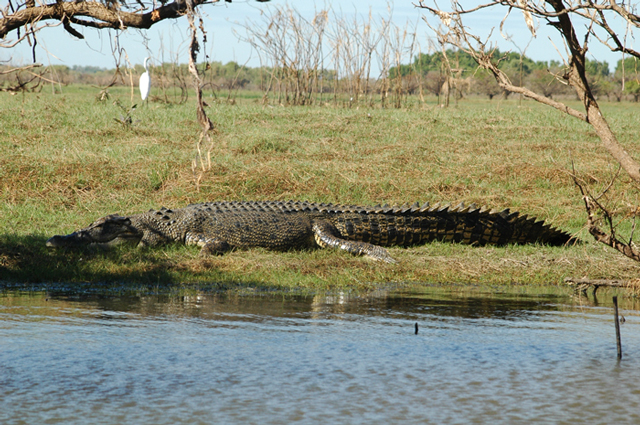
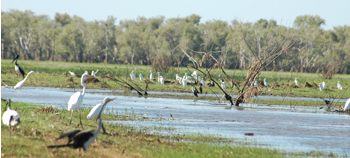 Avian life is very plentiful while there is water. The wet season will cause most of what you see here to be underwater. As the winter season progresses, things will dry up and the water fowl will make there way closer to the sea to follow
 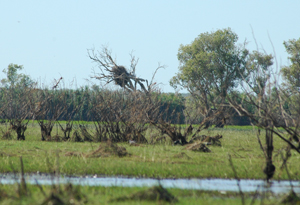 the water as it retreats. Evidence of the amount of water there is during the rainy season can be seen in the trees, which contain debris from the flow of water to the see. The amount of excess water is measured in meters, not centimeters or millimeters.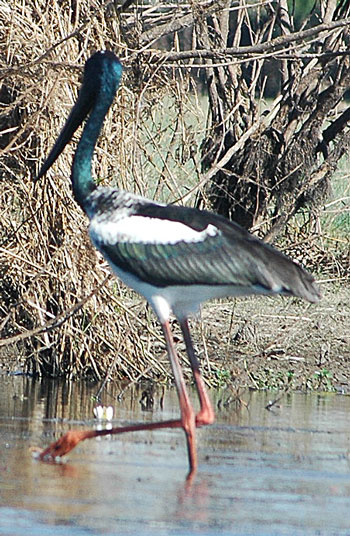
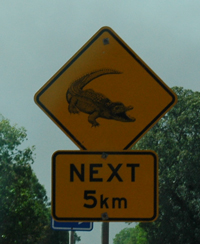 At this point we had not yet entered the formal boundaries of the Kakadu National Park. As we reached the entrance, the driver stopped for a photo op and then we proceeded to Jabiru, our campsite town which had a visitors center for us to help acquaint ourselves with the region. There was an excellent film on the seven different climate times in the region, periods where the change in weather has the most profound effect on the environs. The Eskimos have many words in their language to distinguish among the various types of snow. Here the distinction is made with the amount and intensity of water in the weather.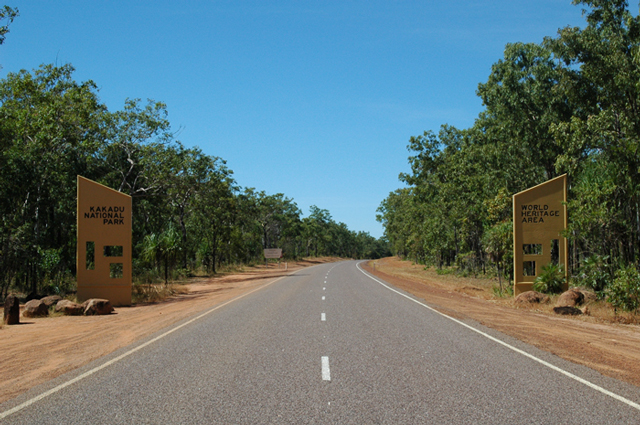
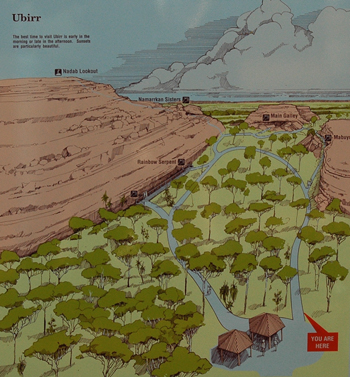 We were off to see rock art at Ubirr Rock. This ancient site, estimated to be over ten thousand years old, is a park of Aboriginal rock paintings protected by the government. These paintings and the stories they tell are part of the unwritten library of knowledge and spiritual beliefs of these people. Senior clan members own certain parts of the library and pass it on to succeeding generations via song, dance and oral tradition. This site is of particular importance as it is thought that some of the paintings here were done by very early Aboriginal people during the "Dream time" when the land and all that is in it was formed.