|
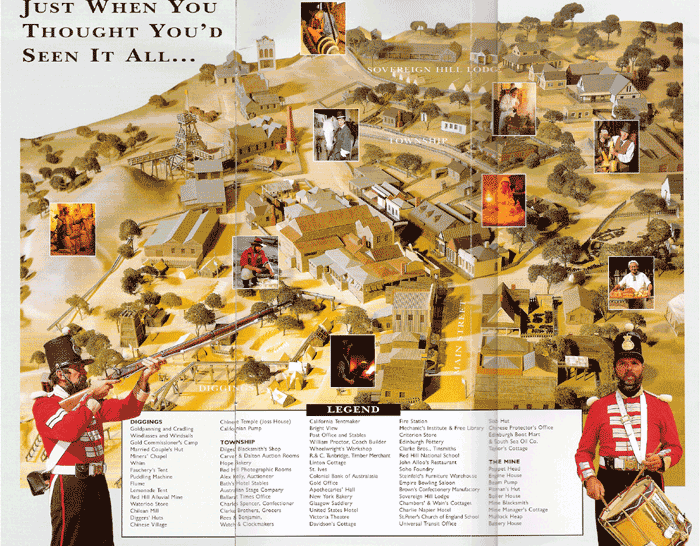
 On the Sunday before our trip to Hanging Rock, we decided to pay a visit to the gold rush restoration site in Ballarat known as Sovereign Hill. We had originally thought that we might drive out to a wildlife sanctuary in a town called Healesville, but we also wanted to invite my officemate, Ron Steer and his wife, as they were visiting the department for only one month and had no means of transportation. Since they had already been to the sanctuary the weekend prior, we opted for the Ballarat venue as we all had not yet been there. On the Sunday before our trip to Hanging Rock, we decided to pay a visit to the gold rush restoration site in Ballarat known as Sovereign Hill. We had originally thought that we might drive out to a wildlife sanctuary in a town called Healesville, but we also wanted to invite my officemate, Ron Steer and his wife, as they were visiting the department for only one month and had no means of transportation. Since they had already been to the sanctuary the weekend prior, we opted for the Ballarat venue as we all had not yet been there.
 A bit of background would seem appropriate here. The discovery of gold in the region just north and west of the city of Melbourne literally transformed the landscape and the population of Australia in 1850. The rush lasted only about ten years, and in that time many a fortune was made and lost. Businesses sprang up to support the processing, transport and conversion of the gold ore found in the mines. Ballarat was one of the mining centers, and the town grew very quickly. Today to commerate the history of the town and the region, a museum recreating the site was erected within the town limits of Ballarat and was named Sovereign Hill. A bit of background would seem appropriate here. The discovery of gold in the region just north and west of the city of Melbourne literally transformed the landscape and the population of Australia in 1850. The rush lasted only about ten years, and in that time many a fortune was made and lost. Businesses sprang up to support the processing, transport and conversion of the gold ore found in the mines. Ballarat was one of the mining centers, and the town grew very quickly. Today to commerate the history of the town and the region, a museum recreating the site was erected within the town limits of Ballarat and was named Sovereign Hill.
Today, the site is the center of a booming tourist business with bus loads of tourists bearing high tech cameras crawling all over the lot, wanting to participate in every organized activity. That is not to say that Australians don't visit, for they do. This site is a favorite of school outings.
Basically the theme is a gold town complete with th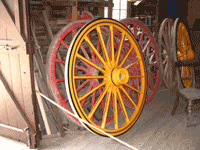 e support services and underground mines. Local residents are hired to dress in authentic garb and act out in various rolls portraying e support services and underground mines. Local residents are hired to dress in authentic garb and act out in various rolls portraying 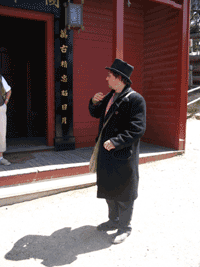 towns people of the time and explaining about living conditions and aspects of gold mining. There are essentially three main sections of the town: the gold field where the mines are located and a river for panning activities, a main street where the shops are located and commerce was conducted and the residential section where some of the more established merchants and citizens would have their homes. All of the buildings are open for inspections and some contain shops to buy memorabilia and others are exhibits with occasional tutorials explaining the function of the equipment and the process for making things such as wagon wheels and candles. towns people of the time and explaining about living conditions and aspects of gold mining. There are essentially three main sections of the town: the gold field where the mines are located and a river for panning activities, a main street where the shops are located and commerce was conducted and the residential section where some of the more established merchants and citizens would have their homes. All of the buildings are open for inspections and some contain shops to buy memorabilia and others are exhibits with occasional tutorials explaining the function of the equipment and the process for making things such as wagon wheels and candles.
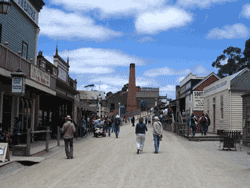 We set off for Ballarat early enough to make a ten AM arrival. The day was just gorgeous, weather wise, and we quickly suited up for the sun and purchased our tickets at the entrance. There was not yet a large crowd so that process went very quickly. We set off for Ballarat early enough to make a ten AM arrival. The day was just gorgeous, weather wise, and we quickly suited up for the sun and purchased our tickets at the entrance. There was not yet a large crowd so that process went very quickly.
Upon entering the site, you are brought first to a small museum explaining the history and circumstances that led up to the rush, statistics of the numbers of people and the amount of gold that was mined during the period and lots of remnants of tools and living utensils. The completeness of the exhibition was impressive. From the museum you walk into a movie theatre where you sit for a ten minute presentation of the story of the rush. Once that is over, the back doors of the theatre open and you find yourself in the recreated town.
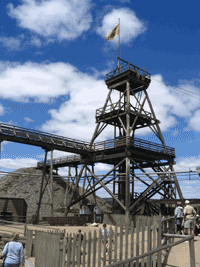
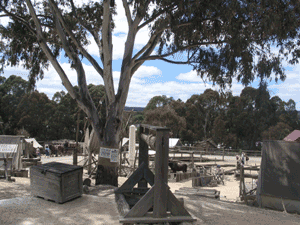
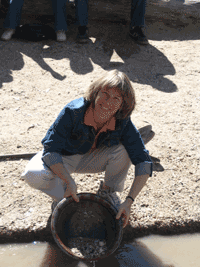 The site is situated on a hill (duh, its in the name) so you get a feeling of largess. A river runs directly through the mining area, and you see people panning for gold! There are sluces and holes in the ground with wooden cranks over them to bring up buckets of soil and let up and down supplies to the workers. You can also see very large structures that represent covers over larger mine entrances. These buildings cover machinery that is used to lift people and ore up and down as necessary. The historical society responsible for building and maintaining the site actually dug out a new mine shaft and tunnels, wired them for sound and lighting much like a stage, and even connected them to some of the original shafts that were dug back in the 1850's. This new shaft and tunnel system is the site of holographic presentations of some of the more important discoveries that were made. This was seriously cool and much like Disney had done in the seventies at Disneyland. The site is situated on a hill (duh, its in the name) so you get a feeling of largess. A river runs directly through the mining area, and you see people panning for gold! There are sluces and holes in the ground with wooden cranks over them to bring up buckets of soil and let up and down supplies to the workers. You can also see very large structures that represent covers over larger mine entrances. These buildings cover machinery that is used to lift people and ore up and down as necessary. The historical society responsible for building and maintaining the site actually dug out a new mine shaft and tunnels, wired them for sound and lighting much like a stage, and even connected them to some of the original shafts that were dug back in the 1850's. This new shaft and tunnel system is the site of holographic presentations of some of the more important discoveries that were made. This was seriously cool and much like Disney had done in the seventies at Disneyland.
The main street was a working place of commerce with tourist shops replacing some of the normal stores one might have found in a town like this. Other shops were working museums dedicated to things such as the undertaker and pine box maker, candlemaker, stagecoach wheel maker and more. We attended some of the organized presentations by staff on 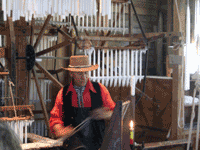 dipping candles and manufacturing coach wheels. Big old machines used in the day were still running and being used in these demonstrations. On a regular basis a group of dipping candles and manufacturing coach wheels. Big old machines used in the day were still running and being used in these demonstrations. On a regular basis a group of 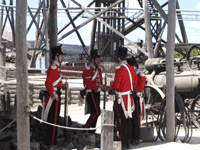 "red coats" would march up the main street of the town and tend to the flag including a rifle volley. Quite impressive. "red coats" would march up the main street of the town and tend to the flag including a rifle volley. Quite impressive.
To a much lesser extent the residential section was open for inspections. I say lesser extent because there were fewer resident homes and there was less to show off. So we tottered off to the gold fields again to pan for gold. We were instructed in the technique and told that real gold flecks were "seeded" in the river for us to find. Low and behold, both Edite and I found a piece the size of a grain of salt. This was tedious work.
We also attended a session on the processing of the ore into 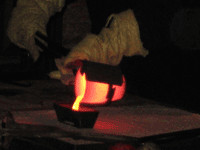 gold ingots. This was very interesting as the presenter was quite professional and managed to convince the audience that he was indeed from the 1850's. During the course of the presentation a piece of ore was melted down and an ingot was poured right before our eyes. This was a world class presentation. gold ingots. This was very interesting as the presenter was quite professional and managed to convince the audience that he was indeed from the 1850's. During the course of the presentation a piece of ore was melted down and an ingot was poured right before our eyes. This was a world class presentation.
So, we looked at our collective watches and decided that the day had flown by. We climbed back into the car and drove back to Melbourne talking of the sights we had seen and experienced.
|
|